
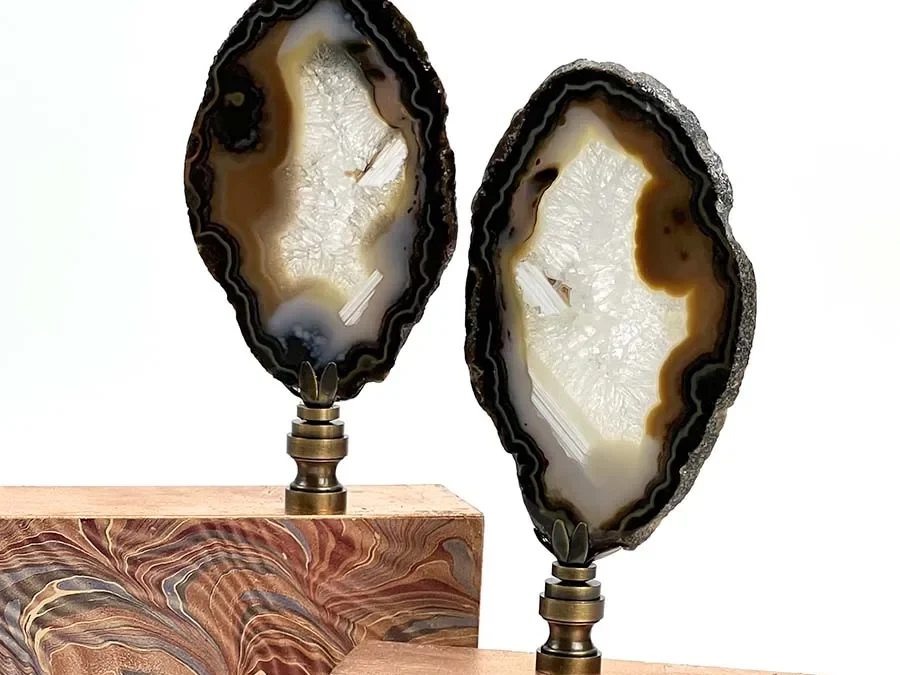
A finial is the small decorative piece that sits at the very top of a lamp, right above the shade. It secures the compatible shade in place while adding a polished, finished look to the whole fixture.
Most people don’t realize how important it is to get this detail right until they actually start shopping for one. The correct finial holds a shade securely without wobbling, and it visually caps the lamp the way a perfect frame finishes a piece of art hanging on the wall.
This guide walks through what a finial actually does, how it interacts with different shade styles, and how to pick one that suits both your hardware and your personal taste.
Lamp Finial Definition and Purpose
Broadly speaking, a finial is any finishing ornament placed at the top or end of an object, from a curtain rod to a fence post to a piece of antique furniture. On a lamp specifically, it takes on both a practical and decorative role at once.
Understanding what a finial is in this broader sense makes its specific lamp function much easier to picture, since the same basic idea shows up across many different household objects.
Position on the Lamp
You’ll find the finial screwed onto the threaded top of a lamp’s harp, directly above the shade itself. That small threaded rod is precisely what the finial grips onto once everything is fully assembled and ready for use.
Most people don’t notice this small detail until it goes missing. A misplaced finial is one of the more common reasons a shade suddenly starts sliding or tilting to one side.
It’s worth noting that a finial secures a compatible shade assembly rather than connecting every component of the lamp together. The socket, wiring, and base all function independently of this one small decorative piece.
This distinction matters quite a bit when troubleshooting a wobbly lamp at home. A loose finial affects only the shade’s stability, not the electrical function underneath it, which usually rules out one possible cause quickly.
Function and Finish
Functionally, the finial holds the shade snugly against the harp so it doesn’t tilt or slide around unexpectedly. Without it, even a well-fitted shade would sit loose and shift with every gentle bump of the table nearby.
Decoratively, the finial acts like a small piece of jewelry for the entire lamp. It’s often the last detail a person notices and frequently the one that ties the whole fixture together.
Understanding what a lamp finial is at this level explains why so many designers treat it as more than an afterthought. A mismatched or missing finial can make even a beautiful shade look strangely unfinished.
How Lamp Finials Work With Shades
Understanding the relationship between the harp, the shade’s internal spider fitting, and the finial clears up a lot of common confusion. Not every shade on the market actually needs one to stay secure and properly positioned.
Harp and Spider Fitter
A shade with a spider fitter has a metal frame at its top, meeting at a small center ring. That ring rests directly on the harp, and the finial screws down on top of it to hold everything firmly in position.
This setup is the most common one found in American table and floor lamps today. If your current shade uses this style, replacing a lost or broken finial is usually a quick and genuinely simple fix.
Most hardware stores and lamp specialists stock a range of standard sizes, so tracking down a suitable replacement rarely takes more than a single trip or a quick online order.
Keeping the original packaging or noting the size when you first buy a lamp makes any future replacement significantly easier down the road.
Shades Without Finials
Clip-on and uno-fit shades work differently and generally skip the standard harp-mounted finial altogether. A clip-on shade attaches directly to the bulb using a small metal clip instead of a harp assembly.
This distinction matters when you’re mixing and matching an old base with a new shade. Confirming which fitter type your current lamp uses saves a return trip before you’ve even left the store.
A uno-fit shade screws onto a threaded socket, most often found on lamps where the bulb points downward toward the base. Neither style relies on a finial for security, since each attaches somewhere else entirely.
Anyone researching what is a finial on a lamp for the first time often assumes that every shade needs one. In practice, plenty of popular shade styles simply don’t use one at all, and that’s perfectly normal.
Types of Lamp Finials
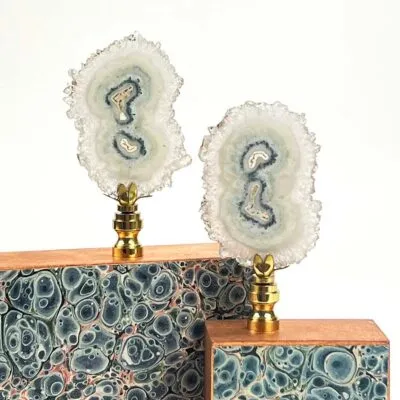
Finials come in a genuinely wide range of materials and shapes, far beyond the plain brass knob most people picture at first. Material and finish, along with overall shape, both work together to shape the lamp’s total personality.
Materials and Finishes
Brass remains a classic choice, especially in antiqued or polished finishes that suit traditional lamp bases beautifully. Wood brings warmth and a more casual, organic feel to the fixture sitting just above it.
Ceramic and glass finials add color and texture that plain metal simply can’t replicate on its own. Resin versions offer flexibility too, often mimicking pricier materials at a friendlier price point for most everyday budgets.
Finish matters just as much as the base material itself. A brushed nickel finial reads cooler and more modern, while an aged brass or bronze finish leans warmer and more traditional in feel.
Shapes and Motifs
Simple ball and knob shapes stay quiet and let the shade and base do the visual talking instead. Geometric forms lean more contemporary, echoing clean lines found elsewhere in modern furniture collections.
Neither approach is inherently better or more correct than the other. The right choice simply depends on whether you want the finial to blend in quietly or step forward as its own small statement piece.
Botanical and sculptural finials, shaped like acorns, pinecones, or small collected objects, add real personality and whimsy to a lamp. These decorative motifs have deep historical roots reaching back centuries.
A finial is a decorative feature on the top or end of an object or structure, a tradition running through architecture and decorative arts alike, long before it ever appeared on a lamp harp.
How to Choose Finials for a Lamp
Choosing a finial comes down to two separate steps: confirming it actually fits, then deciding how it should look once it’s attached. Skipping that first step is exactly how most return headaches begin. Knowing how to choose finials the right way starts with fit, not looks.
Fitting Compatibility
Before considering color or shape, confirm the finial matches your lamp’s existing threaded fitting. Most standard American harps use a common thread size, though variations do exist across different manufacturers and eras.
If you’re unsure, bring your old finial to a lamp or hardware specialist for a side-by-side comparison. This single step prevents the frustration of ordering a finial that simply won’t screw on properly once it arrives.
Taking a quick photo of the threaded rod before you shop can help too, especially if you’re comparing options online rather than in person at a physical store.
Hardware mismatches actually cause more lighting headaches than most people expect going in. Loose or improperly matched fixture components accounted for roughly 19% of the incidents reviewed in a U.S. Consumer Product Safety Commission evaluation of electric lighting products. Confirming fit protects both appearance and safety over time.
Scale and Style
A simple, understated finial helps balance an expressive, patterned shade without competing for attention. Let the shade carry the visual weight while the finial quietly finishes the composition sitting on top.
A quieter, solid-colored shade, on the other hand, has more room to support a bolder, more sculptural finial. That contrast keeps the eye moving naturally from base to shade to that final decorative touch above.
Think of the finial as the last sentence of a well-told story. It doesn’t need to shout, but it should feel like it genuinely belongs with everything that came before it.
Here’s a quick way to think through the decision before you commit to a purchase:
- Confirm the fit first: Match the threaded fitting before anything else enters the conversation.
- Consider the shade’s pattern: Busy shades pair best with quieter, simpler finials.
- Weigh the lamp’s overall style: Traditional bases suit brass or wood, while modern bases lean toward clean geometric shapes.
- Test before committing: Screw the finial on and step back to check the proportions in the room itself.
A little patience here goes a long way toward a finished lamp that actually feels intentional and well considered, rather than thrown together at the last minute.
A Small Detail That Finishes the Whole Lamp
The finial might be the smallest piece on your lamp, but it’s rarely the least important one in the finished picture. Getting the fit and style right pulls the entire fixture together into something that feels genuinely complete, rather than left half done or overlooked entirely.
When you’re browsing new lampshades orlamp finials,Shandell’s hand-marbled designs make that final decorative touch feel effortless and worth the extra attention it deserves.
Lamp Finial FAQs
Do all lamp shades need a finial?
No, only shades using a harp-and-spider assembly typically require one for security. Clip-on and uno-fit shades attach through different hardware and generally skip a standard finial entirely.
What size lamp finial do I need?
Check the threaded opening on your current hardware and match it against the replacement finial's listing. Also choose a height and width that feels visually proportionate to your lamp's overall scale.
Can I replace a lamp finial?
Yes, compatible finials are generally easy to unscrew and swap out at home. Always switch the lamp off first, and support the shade gently while you make the change.