
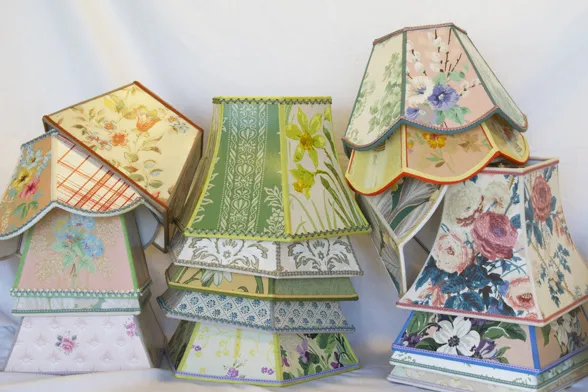
A shade with a real pattern does much more than just covering a bulb. It sets the tone of the entire room the second the light clicks on, pulling color and texture out of the space around it. That’s the quiet power of a well-chosen shade over a regular one.
You’re not just picking a lamp accessory when you shop for a shade. You’re choosing a small, glowing piece of art that shapes how a corner of your home feels every single evening, long after the lights first click on—cozy and inviting at the same time.
Why Patterned Lamp Shades Add Character and Depth
Pattern brings visual rhythm into a room that flat, solid shades simply can’t offer. A hand-marbled or richly printed shade catches the eye at both day and night. It pulls small threads of color from elsewhere in the space, tying a room together without anyone noticing the effort behind it.
Picture a reading nook with a deep green armchair and a framed botanical print nearby. A decorative lamp shade carrying flecks of that same green does more than light the corner. It quietly links the furniture, the art, and the lamp into one cohesive scene.
Solid shades still have their place, and there’s nothing wrong with choosing one for a quieter room. They recede into the background and let other elements of a room take center stage instead.
Patterned shades ask for a bit more attention in return. They reward that attention generously once the lamp is switched on and the pattern starts to glow softly against the walls.
The lamp stops being purely functional once the pattern enters the picture. It becomes a focal point, something guests notice and ask about. That shift, from utility to decoration, is precisely what makes patterned lamp shades worth considering for almost any room.
How to Choose a Lampshade Pattern for Your Room
Picking the right pattern isn’t about matching everything in the room perfectly. It comes down to three practical factors working together: color, scale, and how much visual activity already fills the space. Let’s decode them here:
Color Relationships
Start by pulling one color already present in the room, whether from a rug, throw pillow, or piece of art. Repeating that color in the shade creates an instant sense of intention. You don’t need an exact match, just a close cousin in the same family.
A related color palette works well too, especially if your room leans toward warm or cool tones already. Deliberate contrast is another option for rooms that feel a little flat. A single unexpected color in the shade can wake up an otherwise neutral space.
Pattern Scale
Small-scale motifs suit smaller lamps and rooms where the shade will be viewed up close. Large, bold patterns work well on bigger lamps or in rooms where the lamp is farther from the eye.
Think carefully about what else already sits nearby in the room. A shade with a busy print can clash with a heavily patterned rug or curtain if the scales don’t relate well.
The visual weight of the lamp base matters here too, more than most people expect at first. A substantial, sturdy base can carry a bolder pattern without ever looking top-heavy or unbalanced.
Style Balance
Quieter rooms with mostly solid furnishings have space to breathe with an expressive, eye-catching shade. It becomes the star of the space without competing for attention. Interiors already carrying several patterns benefit from something more restrained instead.
In those busier rooms, look for a shade that echoes an existing color rather than introducing a whole new motif. That approach keeps the room feeling collected rather than chaotic. It’s a small distinction that changes the entire mood of a space.
Features to Look for When Selecting a Lamp Shade
Appearance only tells half the story when shopping for a shade. The other half is about fit, function, and whether the shade works with your lamp and bulb.
Shape and Proportion
A shade’s width and height should relate directly to the lamp base sitting beneath it. As a general guide, the shade’s diameter should roughly match the widest point of the base, with some leeway depending on the overall silhouette you prefer.
Height matters just as much as width in this equation. A shade that’s too short leaves hardware exposed and looks unfinished, while one that’s too tall can swallow the base entirely.
Experts in lamp construction stress this fit above almost everything else. A lampshade must be both attractive and useful in directing light where needed. That principle still holds decades later.
Before buying, measure your lamp base from the widest point down to the socket. Compare that number against the shade’s stated dimensions rather than guessing by eye. A shade that overwhelms a small base, or disappears on a large one, throws off the whole lamp’s proportions.
Fitter and Bulb Compatibility
Every shade attaches to a lamp through a specific fitter type, and getting this detail wrong means a shade that wobbles or won’t sit level. Check whether your lamp uses a spider fitter, a clip-on style, or a uno fitter before ordering anything.
Bulb clearance deserves just as much care as the fitter itself. Federal safety investigators found that lamp shades sometimes ignite when pushed against a bulb or draped with nearby fabric.
That scenario contributed to a meaningful share of the residential lighting fires reviewed by the U.S. Consumer Product Safety Commission. Always leave breathing room between the bulb and the shade’s inner surface.
Check the maximum wattage listed on your lamp’s socket before selecting a bulb. Matching or staying under that number keeps the shade and your home safer over years of everyday use.
Material and Light
Shade material shapes how much light passes through and how a pattern reads once illuminated. Thicker materials diffuse light more evenly but can mute a pattern’s vibrancy after dark. Thinner materials glow brighter but show every seam and imperfection.
Lining color plays a bigger role than most people expect. A white or light-colored lining reflects more light back into the room, brightening the space overall. Darker linings absorb more light, creating a moodier, more intimate glow instead.
Marble-paper shades strike a particularly nice balance between these two extremes. The layered paint patterns diffuse light gently while still letting the colors show clearly, day or night. It’s part of why handcrafted lampshades built this way hold up so well in real rooms over time, season after season.
How to Style Patterned Lamp Shades for Table Lamps
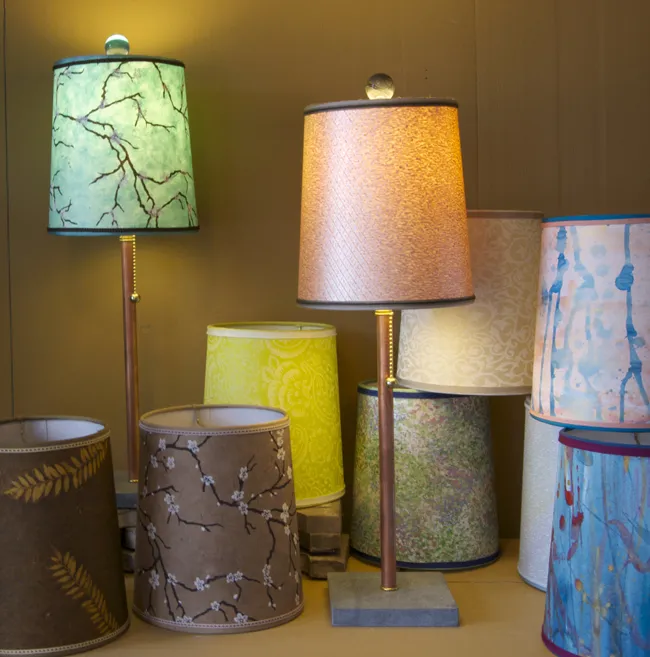
Patterned lamp shades for table lamps work beautifully as either a single statement piece or a coordinated pair. One striking lamp on a console table functions almost like a small piece of art. It draws the eye without needing anything else around it for support.
A matching pair, on the other hand, tells an entirely different design story. Flanking a sofa or bed with two identically patterned shades creates structure and symmetry instantly. That repetition reads as intentional design rather than coincidence, even in a room with plenty of other patterns already at play.
Bedside tables call for a bit more restraint if your bedding or curtains already carry bold prints of their own. Repeating just one accent color from the room, rather than the whole pattern, keeps the space feeling calm rather than cluttered.
Desks and consoles have more room for a lamp with real personality. These surfaces typically hold less competition or patterns elsewhere in the room.
Consider the surface itself when choosing between full and half lamp shades. A half shade against a wall throws light forward into the room instead of wasting it against the wallcovering. It’s a small styling choice that makes a real difference in smaller spaces.
Here’s a quick way to plan out the styling approach for your space:
- Focal lamp: One bold, patterned shade on a console or side table, left to stand alone as a statement piece.
- Matching pair: Two identical shades flanking a sofa, bed, or fireplace for instant symmetry.
- Accent echo: A shade pulling just one color from an already patterned room, keeping busy spaces balanced.
- Visual rest: A calmer, more solid shade placed near heavily patterned textiles to create a visual pause.
Leave visual breathing room wherever curtains, rugs, or upholstery already carry strong patterns of their own. A room doesn’t need a pattern in every single corner to feel finished and complete.
Sometimes the most memorable rooms rely on one exceptional piece surrounded by quieter, supporting choices instead. It’s the same logic behind pairing a well-placed set of marble-pattern coasters with an otherwise neutral coffee table.
A Lasting Glow Worth Choosing Carefully
The right shade turns an ordinary lamp into something you actually look forward to switching on each evening. Pattern, proportion, and proper fit all work together to get there.
Take your time measuring, comparing, and picturing the shade in your actual room before buying anything. When you’re ready for a shade with real character, Shandell’s hand-marbled designs bring genuine artistry to a fixture most people overlook entirely.
Frequently Asked Questions About Patterned Lamp Shades
Do patterned lamp shades reduce light?
The pattern itself has surprisingly little effect on overall brightness in most cases. Material thickness, lining color, and overall opacity determine how much light passes through, far more than the printed or painted design ever does.
Can I mix patterned shades with patterned textiles?
Yes, as long as the patterns connect through color rather than matching exactly. Vary the scale or style of the motifs so each element reads as distinct rather than competing for the same attention.
What fitter do I need for a table lamp?
Check your current shade or the lamp's harp and socket assembly first. Compare that setup against the new shade's listed fitter type and dimensions before purchasing to avoid a mismatch.