
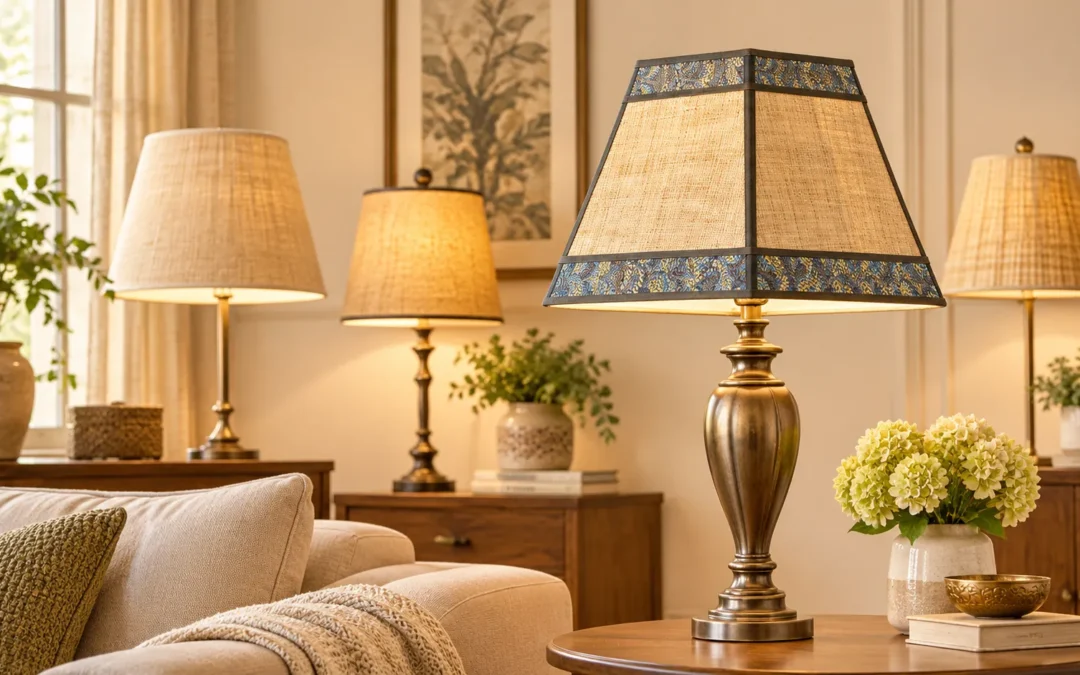
You find a shade you love, bring it home, and something is off. It perches on the lamp like a hat a size too small, swallows a pretty base whole, or simply won’t sit on the hardware. Knowing how to choose lampshade size saves you from all three.
There’s no single formula that works for every lamp. Good sizing comes from four things working together: accurate measurements, sensible proportions, the right fitter, and a designer’s eye for how color and pattern change what you see. This guide walks through each one so you can choose with confidence, whether you’re buying a ready-made shade or having one made for a lamp you treasure.
How to Estimate the Right Lampshade Proportions
Proportion guidelines are a starting point, not a rulebook. Use them to narrow your options, then let the lamp’s shape, the pattern, and the room guide your choice.
Common Sizing Ratios
The most widely used guidelines compare the shade to the lamp base, measured from the bottom of the base to the socket, excluding the harp or bulb:
- Shade height: about two-thirds of the base height
- Bottom diameter: roughly equal to the base height
- Width check: the bottom of the shade should be wider than the widest part of the base
Lighting and interior experts apply these differently. In anIdeal Home feature on bedside lamps, one lighting designer recommends matching shade width to base height, while another suggests a shade about 1.5 to 2 times the base width and roughly 40% of the total lamp height. An interior designer in the same piece notes that the right answer depends heavily on the base itself. That range is precisely why ratios should guide your choice rather than decide it.
Visual Balance
Step back and look at the whole lamp. A balanced shade covers the socket and hardware without hiding the shoulders of the base. But a top-heavy shade looks as if it might tip, and an undersized one makes the lamp look unfinished.
Remember that decoration adds visual size. A hand-marbled paper, a bold color, or a large-scale pattern can make a shade read bigger than its measurements, so a patterned shade may need slightly smaller dimensions than a plain one to look right.
How to Measure a Lamp and Lampshade
A flexible tape measure, a ruler, a notepad, and a few phone photos are all you need. Unplug the lamp and let the bulb cool first.
Measure the Lamp Base
- Base height: from the bottom of the base to the socket
- Base width: across the widest point of the body
- Surrounding space: the tabletop, nearby walls, and anything the shade might bump
Keep base height separate from total height. Total height includes the harp and finial, and mixing the two up is an easy way to end up with a shade that’s too large.
Measure the Existing Shade
Record the top diameter, bottom diameter, and height. If the sides slope, also measure the slant height along the side, since it’s longer than the straight vertical height. Note the fitter type and where it sits inside the shade.
Even a shade that looks wrong is useful. Its measurements tell you which direction to adjust.
Make a Paper Template
Cut a simple silhouette from paper or card and hold it in place on the lamp. Try three versions side by side: one smaller than your measurements suggest, one that matches them, and one larger. Seeing the undersized, balanced, and oversized options on the same base often settles the decision in seconds.
Lampshade Size Guidelines by Lamp Type
Where the lamp sits and how you use it can shift the starting proportions.
Table Lamps
Bedside, console, and living-room lamps need a shade that suits both the base and the furniture beneath it. A wide shade on a narrow console will overhang and get knocked. Check the view from a chair or bed, too. When you’re seated, you shouldn’t see the bulb or bare hardware, and the light shouldn’t shine straight into your eyes.
Floor Lamps
Floor lamps usually need broader shades to balance the pole height and the room size. Consider the full composition, including the base and any nearby furniture. Torchiere and bridge lamps work differently from conventional shaded floor lamps and often call for entirely different shade types.
Accent and Candlestick Lamps
Slim, petite, and tall bases often look best with smaller-diameter or more tapered shades. The aim is to keep the lamp’s delicacy without going so small that it looks like something is missing.
How Shape and Pattern Affect Perceived Size
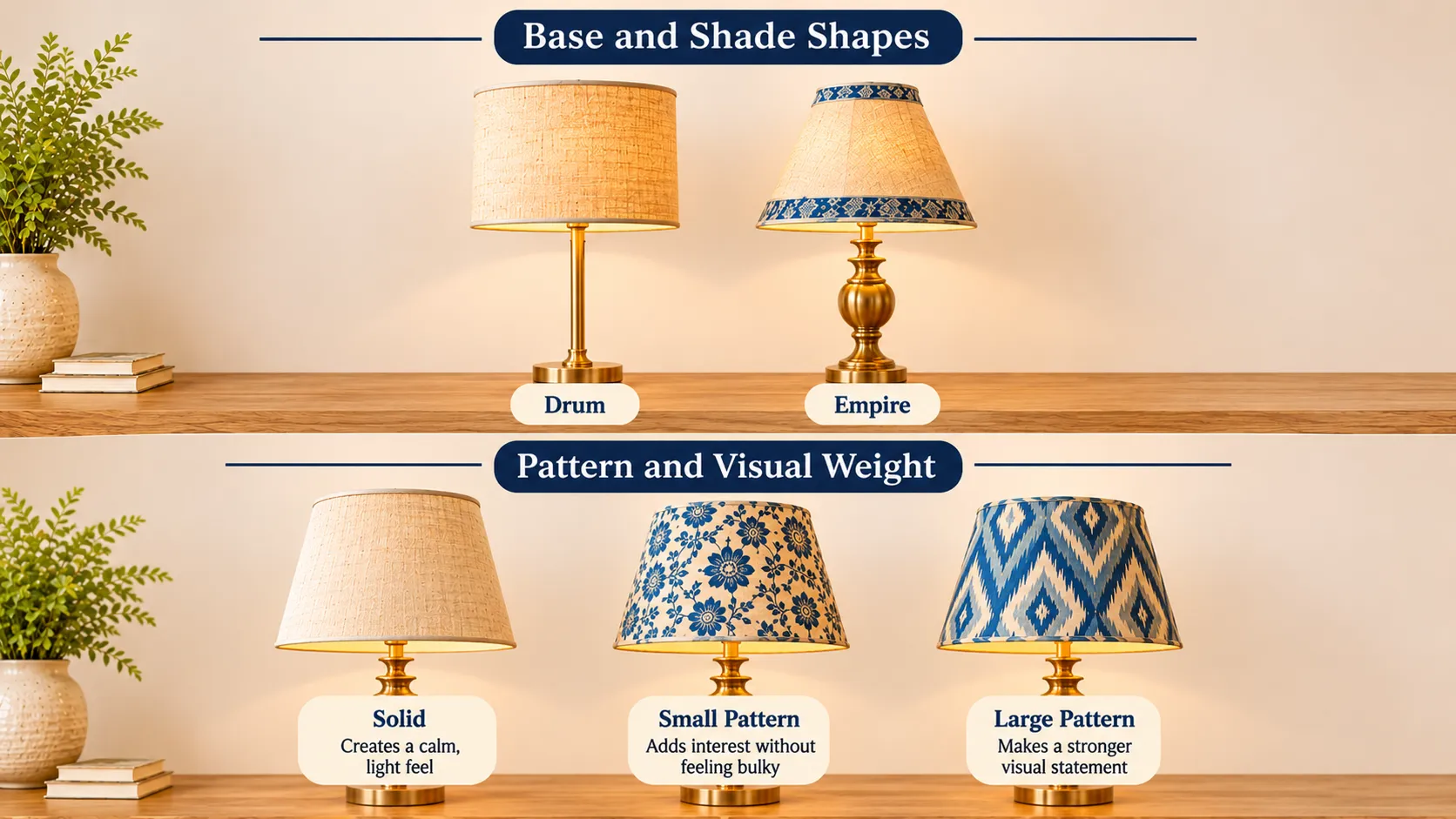
Two shades with identical measurements can look entirely different on the same lamp. Silhouette, material, color, and pattern all change how much space a shade seems to take up.
Base and Shade Shapes
- Drum: straight sides, a crisp, contemporary feel
- Empire: a narrow top that flares out, a classic choice for traditional bases
Matching shape is a reliable principle: round with round, angular with angular. Contrast can work beautifully when you want a more distinctive look, as long as the scale stays balanced.
Pattern and Visual Weight
Dark colors, dense patterns, strong borders, and hand-marbled papers give a shade more presence. View a patterned shade from several feet away, in daylight and lamplight, before you commit. Light passing through a marbled sheet can change how the pattern reads once the lamp is switched on.
This is where a maker’s eye helps. Susan Schneider at Shandell’s sizes each custom shade to the lamp it belongs on and even makes house calls with swatches and samples so the shade can be judged against the base in the room where it will live.
How Fitters, Harps, and Bulbs Affect Fit
A well-proportioned shade still has to attach correctly and leave a safe space around the bulb.
Identify the Fitter
- Spider: a wire frame at the top of the shade that rests on a harp and is held by a finial; the most common fixture on table lamps
- UNO: a ring that sits directly on the socket, used on lamps without a harp
- Clip-on: wire loops that clip onto the bulb, typical for small chandelier and sconce shades
Your fitter must match your lamp’s hardware. If you aren’t sure, photograph the socket, harp, and existing shade from a few angles and share them with your measurements when ordering.
Harp and Bulb Clearance
Harp height decides how high the shade sits. If a shade is the right size but sits too high or too low, a different harp can often fix it.
Always follow the bulb limits marked on the lamp. In a safety release from the National Electrical Safety Foundation, the U.S. Consumer Product Safety Commission advises replacing any bulb with a higher wattage than recommended to prevent overheating. Guidance from the Government of Jersey adds that the wrong bulb type or shape can cause shades to melt or catch fire and warns against placing anything on top of a lampshade.
Lampshade Sizing Mistakes to Avoid
Common Measuring Errors
- Measuring total lamp height instead of base height
- Forgetting to check the fitter
- Recording only one diameter
- Ignoring nearby walls, shelves, or headboards
- Assuming an existing shade is correctly sized because it physically fits
Final Room-Scale Check
Before you decide, look at the lamp standing up and sitting down, with the light on and off. Then run through this sequence:
- Confirm your measurements
- Check the proportions against the base
- Verify the fitter and harp
- Test the visual weight of the color and pattern
- Review the lamp in place
If no standard shade suits your lamp, a custom lampshade made to your measurements can solve the fit and give the lamp a pattern no one else has.
Frequently Asked Questions About Lampshade Size
What Size Lampshade Is Best for a Floor Lamp?
To find the best lampshade size for a floor lamp, measure the whole lamp, then choose a shade wide enough to balance the pole and base without crowding the room. Floor lamps generally suit broader shades than table lamps.
How Can I Tell if a Lampshade Is Too Big?
A lampshade is too big if it hides most of the base, looks unstable, overhangs the table, or crowds nearby furniture. A paper template is a quick way to test before buying.
Can I Use a Different Shape of Lampshade?
Yes. Contrasting lampshade shapes can look striking, as long as the scale feels balanced and the fitter matches your lamp's hardware.
How Do I Know Which Lampshade Fitter I Need?
To figure out which lampshade fitter you need, look at the lamp. A harp with a finial means a spider fitter; a bare socket usually means UNO; small bulb-mounted shades use clip-on fittings. When unsure, share photos and measurements with a shade maker.