
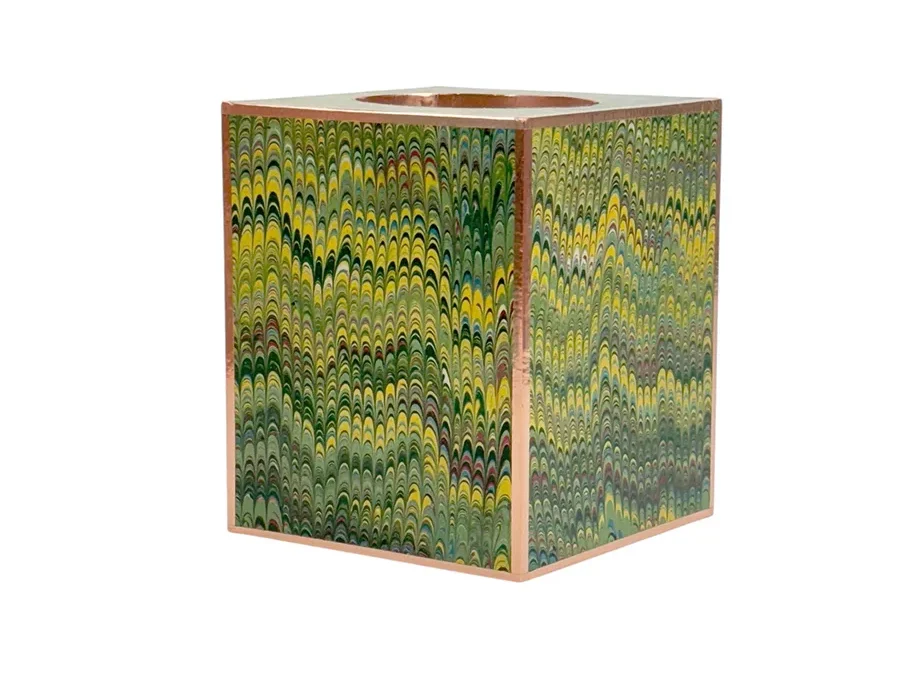
Every home has a few objects that quietly earn their place through daily use. A marble tissue box cover takes one of the plainest household items and turns it into something worth noticing.
The word “marble” here can mean a few different things, depending on the product you’re actually looking at. It might describe genuine polished stone, hand-marbled paper, or a printed marble-effect finish over another material entirely.
Most people don’t realize how important it is to know the difference between different types of marbles before shopping. Each material behaves differently in terms of weight, care, and how the pattern reads once it’s sitting on your counter.
Here’s a detailed guide on choosing the best marble tissue box cover and everything around it:
What Is a Marble Tissue Box Cover?
At its core, a marble tissue box cover is simply a fitted decorative holder or sleeve designed to conceal a standard tissue carton. It hides the branded packaging without ever blocking easy access to the tissues inside.
Think of it as a small piece of functional decor, quietly doing its job while adding real character to whatever surface it happens to sit on. Most people never think to upgrade this particular object, which is exactly why it stands out once someone finally does.
Natural Marble
Genuine stone covers feel heavy in your hand, and each piece has its own natural tonal variation and veining. No two slabs ever look quite identical, which is genuinely part of the appeal for many collectors and design-minded buyers alike.
Stone is also porous, meaning it can absorb liquids and stains more easily than people expect going in. Following proper care matters, since even a small spill left unattended can leave a lasting mark on the surface.
This porosity is taken seriously by preservation specialists not only in relation to a home accessory but also in much broader contexts. Stephanie Hornbeck, National Preservation Program Officer at the National Archives, explained that wet cleaning methods were avoided during a recent marble restoration project involving a historic public rotunda.
These methods, she noted, “would have transformed the dry pigment into a paint, which would have penetrated the porous marble,” as reported by the National Archives. The same underlying principle applies at home, just on a much smaller and more everyday scale.
Marbled Paper and Marble-Effect Materials
Hand-marbled paper works completely differently from natural stone, relying on pigment floated on liquid and pressed onto the surface by hand. Every single sheet comes out slightly different, since the process resists exact repetition no matter how carefully or skillfully it’s done.
Printed marble-effect finishes, whether applied to ceramic, resin, or composite materials, aim to mimic that same look through mechanical reproduction instead of a hands-on artisan process. The pattern typically repeats in a way that hand-marbled paper simply never does, since machines follow a template rather than intuition.
Neither approach is inherently better or worse than the other in any absolute sense. The right choice depends on whether you want a mass-produced consistency or the small, deliberate imperfections that come from genuine handwork.
Why Use a Marble Tissue Box Cover?
Swapping out branded packaging for a decorative cover gives a small, permanent upgrade to any surface it sits on. The cover can support a room’s color palette instead of fighting against it visually every time you glance over.
Practicality matters just as much as appearance in this decision, even for something so minor. A well-designed cover keeps the tissue easy to reach, sits stably on the counter or table, and gets refilled without any real hassle.
Beyond function, there’s something genuinely satisfying about using a thoughtfully made object every single day. That holds true even for something as ordinary as pulling out a single tissue each morning.
Features to Look for When Choosing a Marble Tissue Box Cover
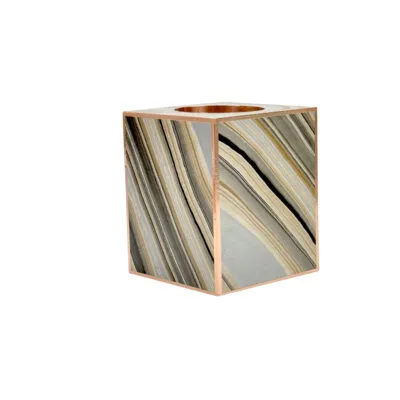
Shopping by “luxury” alone tells you very little about whether a cover will actually work well in your home. A few practical details matter far more than price point ever will on its own, and they’re often the details easiest to overlook.
Reusability is also worth considering as part of this decision. A well-made cover outlasts many boxes of tissues before it ever needs replacing, quietly earning its keep season after season without asking for much in return or any special upkeep.
Correct Dimensions
Standard tissue boxes come in two main shapes: cube and rectangular, and covers are rarely interchangeable between the two. Measure your current box’s internal dimensions before buying, since a mismatch leaves either a gap or a tight, awkward squeeze.
Check the cover’s opening placement too, along with how easily you can slide a fresh box in for a refill. Some designs make this simple, while others require far more patience than they really should.
Photos alone can be misleading here, since scale rarely comes across accurately through a screen. When possible, cross-reference the listed dimensions directly against your tissue box before completing a purchase.
Practical Construction
A stable base keeps the cover from sliding around every time someone reaches in and pulls a tissue out. Look for either a weighted bottom or a well-fitted, snug design that resists tipping on smooth surfaces.
Removable bases or open-bottom designs make refilling considerably easier over time, compared to covers you have to fully lift and flip upside down each time.
Smooth tissue dispensing is more important than it may seem at first. A rough or poorly finished opening can catch and tear tissues, which quickly turns a lovely object into a small daily annoyance instead.
Finish and Craftsmanship
Clean seams and protected surfaces separate a well-made cover from one that will show wear within a few months of regular use. Run your hand along the edges before buying if you’re able to see it in person.
Intentional variation in the pattern often signals genuine craftsmanship, since a maker who understands the material knows exactly where to emphasize it.
Pattern placement matters too, especially when it comes to hand-marbled designs. Thoughtful positioning of color and swirl shows real intention, rather than the pattern simply being wrapped around at random.
How to Style a Marble Tissue Box Cover
Treating a small accessory like part of a room’s overall composition doesn’t require making it feel overly matched or forced in any way. A little restraint goes a long way toward keeping things looking natural.
Color and Pattern
Pull one or two colors directly from the marbled pattern and echo them elsewhere in the same room. A cover carrying blue, ochre, and cream tones can connect a neutral bathroom vanity with a patterned lampshade in an adjoining room.
That kind of subtle repetition connects spaces without making anything feel too coordinated or planned. It reads as natural and genuinely lived-in, rather than staged for a photograph.
Placement by Room
Bathroom vanities are the most common spot, though moisture exposure matters depending on the material you’ve chosen for the space. Bedside tables and desks work beautifully too, especially in guest rooms or home offices.
Living room surfaces can handle a bolder pattern, since these spaces typically see less splashing and general clutter than a bathroom counter does day to day. A statement piece can sit comfortably on an open shelf nearby.
Coordinated Accessories
Pairing the cover with a tray, a lamp, or a wastebasket creates a small collected vignette rather than one isolated object sitting alone. Vary the pattern scale slightly to avoid an overly matched, showroom-style look.
A patterned marble-paper lampshade nearby can echo the same color story without repeating the exact motif, which keeps the whole grouping feeling intentional rather than accidental or overdone.
How to Clean and Care for a Marble Tissue Box Cover
Care instructions differ significantly depending on the material, so it truly helps to know which type you actually own before reaching for any cleaner. Here’s a quick breakdown of care by material type, so you always know where to start:
- Natural marble: Dust regularly with a soft, dry cloth and wipe spills immediately using plain water.
- Sealed marbled paper: Dust gently and avoid soaking the surface, since moisture can affect the paper over time.
- Synthetic marble-effect surfaces: Wipe with a barely damp cloth, then dry thoroughly to prevent streaking or residue.
Acidic cleaners deserve particular caution around any genuine stone surface, even in small everyday accessories like this one. According to the National Park Service, acidic cleaners can be extremely damaging to acid-sensitive stones such as marble, resulting in etching and dissolution over time.
Common kitchen staples like vinegar or lemon juice fall into that acidic category too, even though they seem harmless enough for everyday cleaning tasks. Always check the maker’s specific care guidance before applying anything beyond plain water to a piece.
A Small Object Worth Loving Every Day
A tissue box rarely gets much thought, yet it sits in plain view on the counter or nightstand every single day of the year. Choosing one with a real pattern and craftsmanship turns a forgettable object into something that quietly makes you smile.
Shandell’s hand-marbled paper covers bring exactly that kind of everyday delight into a home, one small detail at a time, worth noticing far more often than you’d expect.
Frequently Asked Questions About Marble Tissue Box Covers
What size tissue box cover should I buy?
Measure your current tissue carton first, then confirm whether the cover you're considering fits a cube or rectangular box. Internal dimensions matter more than the cover's outer appearance when it comes to actual fit.
Can I use one in a bathroom?
It depends entirely on the specific material you're considering for the space. Sealed marbled paper and properly finished synthetic surfaces generally tolerate typical bathroom humidity, while unsealed materials may need better ventilation or more frequent, careful maintenance.
How do I clean a marble tissue box cover?
Cleaning depends on the specific material involved, so always start with the maker's care guidance. In general, dry dusting and prompt spill attention protect most tissue box covers far better than any specialty cleaner would.