

The choice of bringing the right lampshade into your room starts with two important questions: where will the lamp sit, and what specific job does the light need to do? Answer those first, and everything else—size, shape, material—becomes much easier to figure out.
Most people jump straight to color or pattern and then wonder why the finished lamp never looks quite right. Working through lamp type, measurements, shape, and material in order solves that problem before it ever starts.
Here’s a quick and helpful guide on choosing the right lampshade for your room that brings every element together:
How Lamp Type and Lighting Needs Guide Shade Choice
Every lamp has a job to do before it has a look to achieve. Where it sits and how it’s used should shape your shade decision long before style enters the conversation.
Table and Floor Lamps
A table lamp sits close to eye level, so its shade gets seen up close, seam and all. Floor lamps stand taller and are viewed from farther away, so bolder shapes and patterns read more clearly across the room.
Furniture placement matters a great deal here too, more than most shoppers realize at first. A lamp squeezed between a sofa arm and a side table needs a narrower profile than one standing alone in open floor space nearby.
Ambient and Task Lighting
Ambient lighting fills a room with a soft, general glow, while task lighting needs to be brighter and more functional for reading or close work. A dense shade suits ambient use nicely, while a lighter, more open shade suits focused tasks better.
This distinction has real research behind it, not just decorating instinct. For effective lighting and easy seeing, there should be at least one-tenth as much light throughout the room as there is at the actual reading or work center.
That balance still guides good lamp choices today, even with modern bulb technology and LED options widely available.
How to Measure for the Right Lampshade Size
Getting the measurements correctly before you shop prevents the two most common lampshade mistakes: a shade that overwhelms its base or one that leaves the hardware embarrassingly exposed. Here’s how to go about the measurements correctly:
Lamp Base Measurements
Start by measuring your lamp base from the table or floor up to where the harp meets the socket. Note the base’s widest point too, since that number drives most of the proportion decisions ahead.
Write both measurements down before you start browsing, since it’s simple to guess by eye and end up back at the return counter a week later, wasting both time and money.
Shade Width
As a general starting point, a shade’s bottom diameter should measure roughly one to two inches wider than the lamp base at its widest point on each side. This ratio keeps the finished silhouette balanced rather than top-heavy or awkward.
Wider bases can support a slightly larger shade without ever looking overdone or exaggerated. Narrower, more delicate bases usually call for a tighter, closer-fitting shade to avoid swallowing the piece entirely.
Shade Height and Position
Shade height should generally fall between one-half and two-thirds of the lamp base’s own height, measured from the table surface to the harp. This ratio is a helpful starting point rather than a strict rule.
The goal is to achieve full hardware coverage, an accessible switch, and a shade edge that sits just above or level with the bulb. Cutting a paper template first lets you test the proportions before committing to a purchase.
How to Match Lampshade Shape to the Base
The right shape does far more than simply follow passing decorating trends. Repeating or contrasting the base’s own lines creates a combination that either blends seamlessly or stands out with real intention.
Tapered Shades
Empire and cone shades, among others, have tapered profiles that elegantly mirror the arcs of classic or esthetically substantial bases. They soften a heavy silhouette and add a real sense of classic, formal polish to the finished lamp.
This shape works especially well on urn-style or turned-wood bases carrying plenty of visual weight already. The gentle slope keeps the whole lamp feeling proportional rather than boxy, stiff, or overly severe in a formal room.
Drum Shades
Straight-sided drum shades complement streamlined, contemporary bases with a clean, architectural profile that feels intentional. The uniform width from top to bottom creates a modern, understated look that suits minimalist interiors particularly well.
Drum shades also make a striking choice for bases carrying interesting textures or patterns of their own, since the simple shape lets the base itself take center stage instead of competing for attention with the shade above it.
Oval and Angular Shades
Oval and angular shades work well on narrow surfaces or against a wall, where a full round shade might feel too large or bulky for the space available. They also pair naturally with geometric, angular bases found in more modern furniture collections.
Picture the same lamp base fitted first with a tapered shade, then a drum shade. The tapered version reads traditional and soft, while the drum version feels sharper and more contemporary instantly.
How Lampshade Material, Color, and Pattern Affect Light and Style
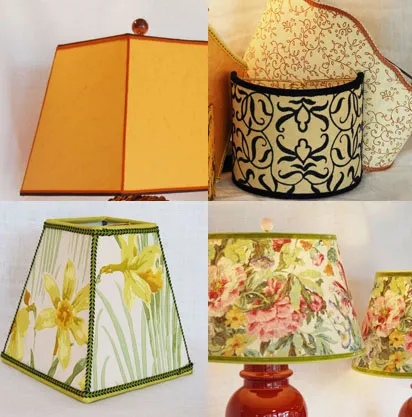
The material and color selection of a shade do much more than just adorn a lamp. They shape how much light escapes, how warm that light feels, and how the shade reads once it’s glowing after dark.
Material and Light
Paper shades tend to glow brightly and evenly, making them a popular choice for warm ambient lighting throughout a room. Linen and cotton shades diffuse light more softly, muting glare while still letting plenty through.
Silk shades sit somewhere in between, offering a warm glow with a bit more shimmer and visual richness. Denser, more opaque constructions block more light but create a moodier, more intimate atmosphere instead.
Hand-marbled paper shades bring their character into this mix, unlike anything mass-produced off a factory shelf. The layered patterns diffuse light gently while still letting the colors and swirls read clearly once the lamp switches on.
Browsing a full collection of handcrafted lampshades makes this difference clear to see firsthand, especially side by side with a plain, solid-color option.
Color and Pattern
Light-colored shades reflect more brightness back into the room, while darker shades absorb light and create a more subdued, focused glow. Neither choice is right or wrong, just suited to different purposes.
Pattern adds another layer entirely to the decision, well beyond simple color choice. A boldly patterned shade can serve as the focal point of an entire room or as the small unifying detail that ties existing colors together seamlessly.
A marble-paper shade from Shandell’s turns an ordinary fixture into a genuine decorative feature worth noticing. It’s proof that how to choose a lampshade wisely means thinking well beyond plain white fabric, and understanding how to pick a lampshade with real personality changes an entire room’s mood.
How to Check Fittings, Bulbs, and Safety
Style and proportion mean little if the shade doesn’t fit the hardware correctly or work safely with the bulb you plan to use every day.
Fitter Compatibility
Shades typically attach using one of three common fitter types: spider, uno, or clip-on. Each connects to the lamp differently, so mismatching the fitter type is one of the most common ordering mistakes shoppers make when buying online.
Before ordering, check your existing shade or the lamp’s harp and socket assembly directly. Compare those details against the new shade’s listed fitter type to avoid a frustrating and unnecessary return down the line.
Bulb Position and Clearance
Bulb clearance and ventilation are just as important as fitter type for both appearance and safety. A bulb sitting too close to the shade’s interior can scorch the material or create a fire risk over time.
An estimated annual average of 8,780 residential structure fires between 1995 and 1999 were linked to electric lighting products, according to the U.S. Consumer Product Safety Commission. Proper clearance and correct wattage can significantly reduce that risk in your home.
Always check the maximum wattage printed directly on the socket, and never exceed that number regardless of the bulb style or brand you personally prefer. Here’s a quick checklist to run through before you finalize any purchase decision:
- Lamp type confirmed: You know whether the lamp needs ambient or task-level light.
- Base measured: Height and widest point are both written down and ready to compare.
- Shape selected: Tapered, drum, or angular, chosen to complement the base’s own lines.
- Material weighed: Paper, linen, silk, or marble paper, picked for the mood you want.
- Fitter and wattage checked: Fitter type matches, and the bulb stays within the rated limit.
Once every box is checked, browsing feels a lot less overwhelming and a lot more like decorating.
A Shade That Finally Fits the Room
Choosing the right shade doesn’t have to feel like guesswork once you understand how lamp type, proportion, and material actually work together in practice. A little careful measuring now saves plenty of frustration and wasted returns later.
When you’re ready for something with genuine character, Shandell’s custom lampshades bring hand-marbled artistry to a fixture most people overlook, turning a purely functional lamp into a conversation piece worth showing off.
Frequently Asked Questions About Choosing a Lampshade
What Size Lampshade Is Best for a Table Lamp?
Measure the base's height and widest point, then aim for a shade roughly matching those proportions. Table size, base shape, and eye-level bulb coverage all factor into the final decision too.
What Size Lampshade Is Best for a Floor Lamp?
Floor lamps generally call for a shade sized to the entire fixture and its intended light output. There's no single standard size, so measuring your specific lamp always matters most.
How High or Low Should a Lampshade Sit?
The shade should fully conceal the socket and most visible hardware without blocking the switch. It also shouldn't sit so close to the bulb that heat becomes a concern.
Do Lampshades Have to Match the Room's Color Scheme?
Not at all, and plenty of the best-looking rooms actually prove that point well. A shade can coordinate quietly with existing colors in the space or introduce a bold, intentional contrast when another element in the room already creates enough visual continuity to support it.